
If you are wondering what AI is, artificial intelligence is simply technology that helps computers perform tasks that normally require human intelligence. From answering questions and writing emails to planning trips and organizing daily tasks, AI tools can help make many activities easier. But if you are new to AI, it can seem confusing at first. This beginner-friendly guide explains what AI is, how it works in simple terms, and how you can start using it confidently in everyday life. How to Use AI for the First Time: A Beginner’s Step-by-Step Guide
What is AI? Understanding Artificial Intelligence
Artificial intelligence is technology that allows computers to perform tasks that normally require human intelligence. These tasks can include understanding language, recognizing patterns, answering questions, creating content, and making suggestions based on information.
You do not need to understand complicated computer science to use AI. Many modern AI tools are designed for everyday users. You can simply type a question or instruction, and the AI responds with information or helps you complete a task.
How Does AI work?
AI works by analyzing large amounts of information and identifying patterns within that data. Based on those patterns, an AI system can generate responses, make predictions, or suggest useful information.
For example, when you ask an AI assistant a question, it analyzes your words and generates a response based on patterns it learned during training. You do not need to know how the technology works behind the scenes to benefit from it—just as you do not need to understand how a search engine works to use one.
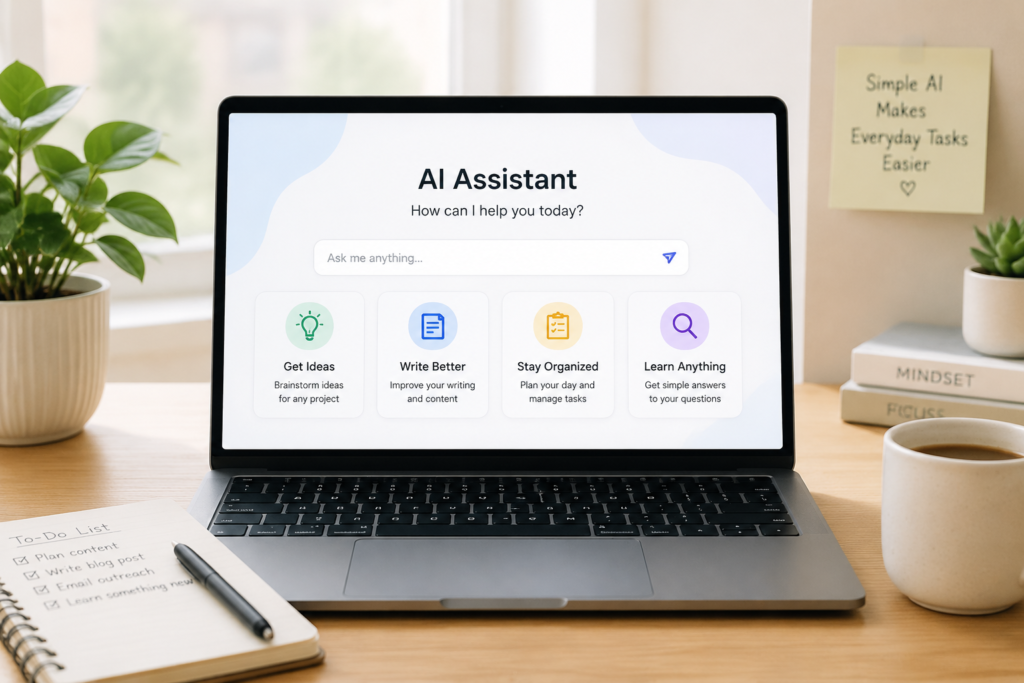
Everyday Examples of AI
AI is already part of many tools and services people use every day. You may be using AI without even realizing it. It can help with everyday tasks such as writing an email, summarizing information, planning a trip, organizing ideas, creating a shopping list, or learning something new.
Some common ways people use AI include:
- Writing and improving emails
- Summarizing long articles or documents
- Planning trips and daily schedules
- Brainstorming ideas for work or personal projects
- Creating shopping lists, meal ideas, or checklists
- Learning new topics and getting simple explanations
How Can AI Help in Everyday Life?
AI can make everyday tasks faster and easier by helping you organize information, generate ideas, and complete routine tasks. You do not need technical skills or programming knowledge to benefit from many AI tools.
For example, you can use AI to draft an email, create a weekly meal plan, organize a travel itinerary, summarize a long document, or brainstorm ideas for a project. Instead of starting from a blank page, AI can give you a useful starting point that you can review and improve.
The key is to think of AI as an assistant rather than a replacement for your own judgment. AI can provide suggestions and save time, but you should still review important information and make the final decision yourself.
What Are the Benefits of Using AI?
For beginners, one of the biggest advantages of AI is convenience. Many AI tools are designed to work through simple conversations, so you can describe what you need in everyday language.
AI can also help you save time, organize information, and get started when you are not sure what to do next. Instead of spending a long time creating something from scratch, you can ask AI for ideas or a first draft and then improve the result yourself.
Some practical benefits of using AI include:
- Saving time on repetitive tasks
- Organizing information more quickly
- Brainstorming ideas
- Simplifying complicated information
- Creating first drafts of emails, plans, and documents
- Learning new topics through simple explanations
AI is most useful when it helps you complete a real task more efficiently. You do not need to use every AI tool available. Start with one simple task and learn what works best for you.
Are There Any Limitations to AI?
Artificial intelligence can be very useful, but it is not always accurate. AI tools can sometimes provide incorrect, outdated, or incomplete information, even when the answer sounds confident.
For this reason, it is important to review AI-generated information before relying on it. This is especially important when dealing with health, financial, legal, or other important decisions. When accuracy matters, check reliable sources and use your own judgment.
AI also does not understand situations exactly the way a person does. The quality of its response often depends on the instructions and information you provide. Clear questions and specific details can help you get more useful results.
Finally, be careful about the personal or sensitive information you share with AI tools. Before using a service, take a moment to understand its privacy settings and how your information may be handled.
How to Start Using AI as a Beginner
Getting started with AI does not have to be complicated. The easiest way to begin is to choose one simple task that you already do in everyday life and see how an AI tool can help.
For example, you might ask AI to help you write a polite email, organize a weekly schedule, create a grocery list, explain a difficult topic in simple language, or brainstorm ideas for a project.
When writing your request, try to be clear about what you want. Instead of simply asking, “Help me write an email,” you could say, “Write a short and friendly email thanking my neighbor for helping me.”
As you become more comfortable, experiment with different instructions and compare the results. You do not need to learn everything at once. Starting with small, practical tasks is one of the easiest ways to understand what AI can—and cannot—do for you.
Frequently Asked Questions About AI
Is AI difficult for beginners to use?
No. Many AI tools are designed for people without technical experience. If you can type a question or instruction, you can start using AI. The best approach is to begin with simple everyday tasks and learn gradually as you become more comfortable.
What can I use AI for in everyday life?
AI can help with many everyday tasks, including writing emails, summarizing information, planning trips, organizing schedules, brainstorming ideas, creating lists, and learning new topics. The best use depends on what you want to accomplish.
Can I trust everything AI tells me?
No. AI can sometimes provide incorrect, outdated, or incomplete information. Always review important information and verify it with reliable sources, especially when making decisions related to health, finances, legal matters, or other important issues.
Do I need to pay to use AI tools?
Many AI tools offer free versions that are enough for beginners to learn and complete basic everyday tasks. Some services also offer paid plans with additional features, higher usage limits, or access to more advanced models. You do not need to pay for several AI tools when you are just getting started.
Conclusion: AI Can Be Simple and Useful
Artificial intelligence may sound complicated at first, but you do not need to understand the technology behind it to start benefiting from it. For most people, the best way to learn AI is simply to use it for small, practical tasks in everyday life.
Start with something simple, such as drafting an email, organizing a schedule, creating a list, or asking for an easy-to-understand explanation of a topic. As you gain experience, you will discover which AI tools and features are most useful for your needs.
Remember that AI is a tool, not a replacement for your own judgment. Review important information, protect your privacy, and use AI as an assistant that helps you work, learn, and organize everyday tasks more efficiently.
At AI Everyday Hub, our goal is to make AI easier to understand and use. We will continue sharing simple, practical guides to help you use AI with more confidence in everyday life.